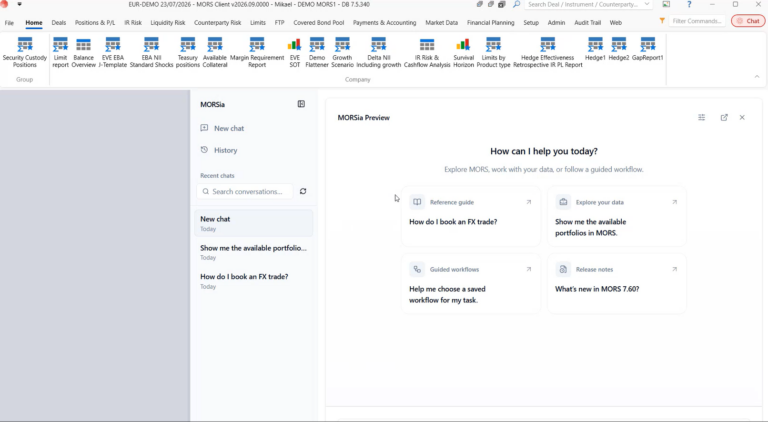
Understand today’s risks. Shape tomorrow’s balance sheet.
MORS combines IRRBB, liquidity risk management, forecasting and financial planning in a single platform designed for modern banks.
Modern banking requires more than measuring risk. Banks need to understand how changes in interest rates, liquidity, funding and business strategy will impact future balance sheet performance.
MORS combines risk management, forecasting and scenario analysis in a single platform, helping banks make informed decisions, evaluate strategic alternatives and navigate changing market conditions with confidence.
Use the same reliable data and consistent calculations for both regulatory requirements and internal risk management. Support regulatory compliance while providing valuable insights for strategic balance sheet decisions.
Understand your current risk position, forecast future exposures and explore historical developments, all within one system. Gain a comprehensive view of how your balance sheet risks evolve over time.
Arrive at the office with an up-to-date balance sheet and readily available reports. Automated data management and streamlined processes reduce manual work, improve data consistency and allow your team to focus on analysis rather than data management.
Turn complex balance sheet data into clear, actionable insights with intuitive visualisation and reporting tools. Support ALCO discussions, management reporting and strategic decisions with a clearer understanding of risks and performance.
Complete transparency from top level down to individual transactions and cash flows.
Combine MORS ALM and Treasury Management on a shared platform to create a unified view of liquidity, funding and balance sheet performance.
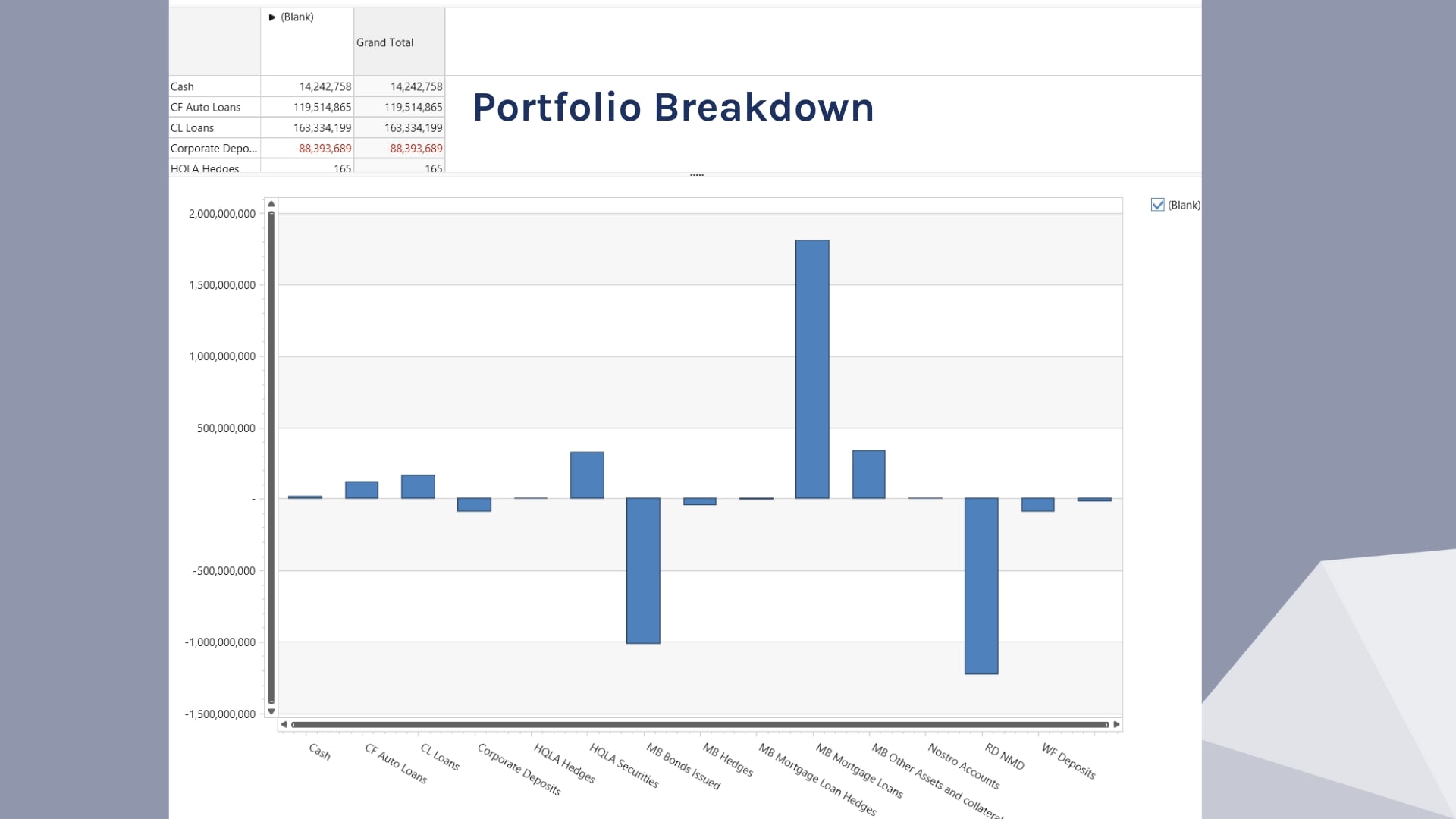
MORS provides comprehensive market risk management capabilities with a particular focus on Interest Rate Risk in the Banking Book (IRRBB). Through integrated modelling, forecasting and scenario analysis, banks can assess the impact of changing market conditions on earnings, economic value and overall balance sheet performance.
Manage Interest Rate Risk in the Banking Book through integrated analysis of earnings sensitivity, economic value and behavioural assumptions.
The IRRBB functionality supports Basel, EBA and local jurisdiction regulatory requirements.
Assess interest rate risk from both Economic Value of Equity (EVE) and Earnings at Risk (EaR) perspectives, helping banks understand the impact of changing interest rates on capital value and future earnings.
Identify and monitor the key components of IRRBB, including repricing mismatches, basis risk and embedded optionality.
Incorporate behavioural assumptions such as loan prepayments, deposit stability and balance run-off profiles into scenario analysis.
Assess portfolio market risk exposure through Value at Risk analysis and reporting.
Monitor foreign exchange exposures across currencies, portfolios and consolidated positions.
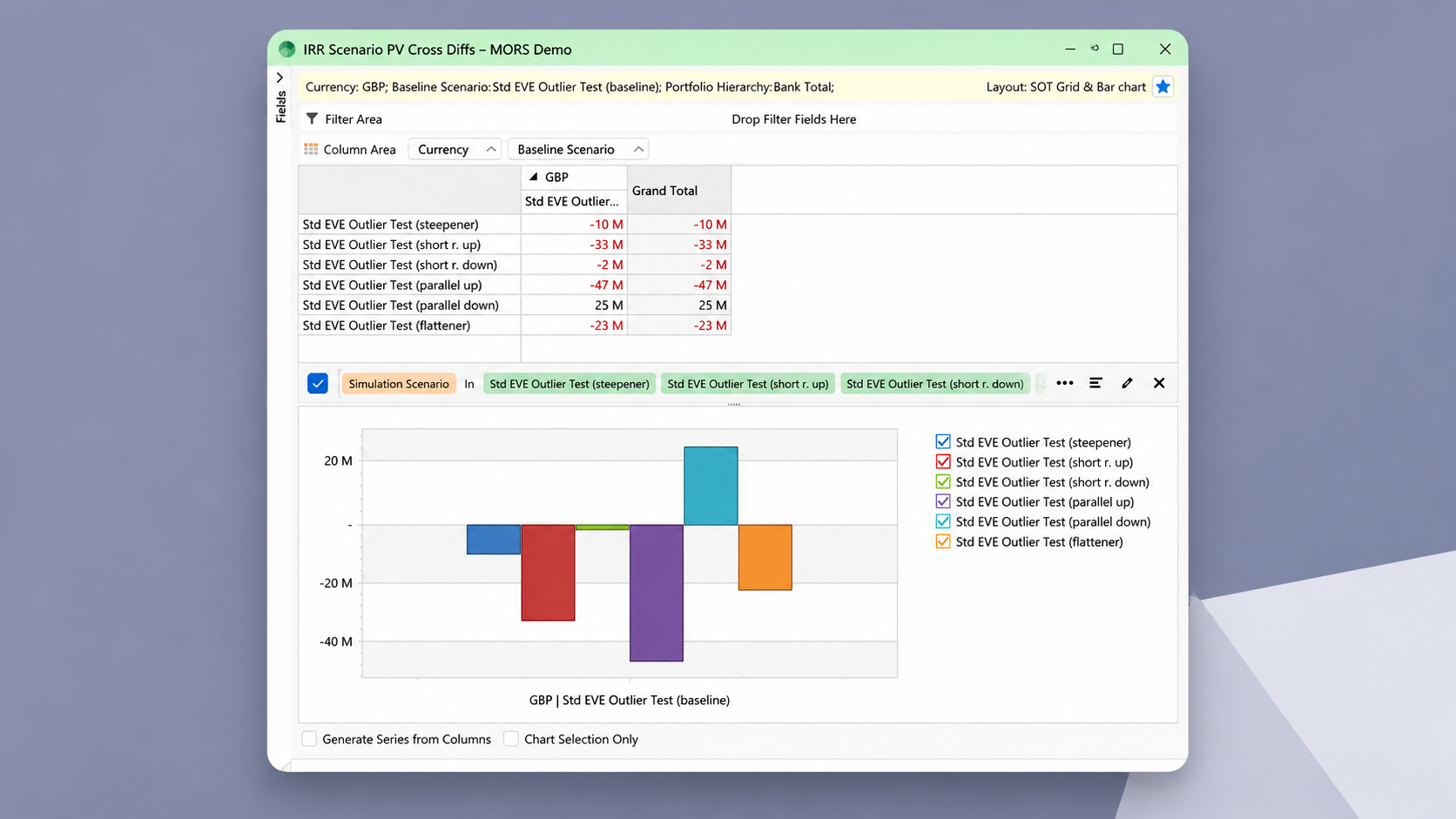
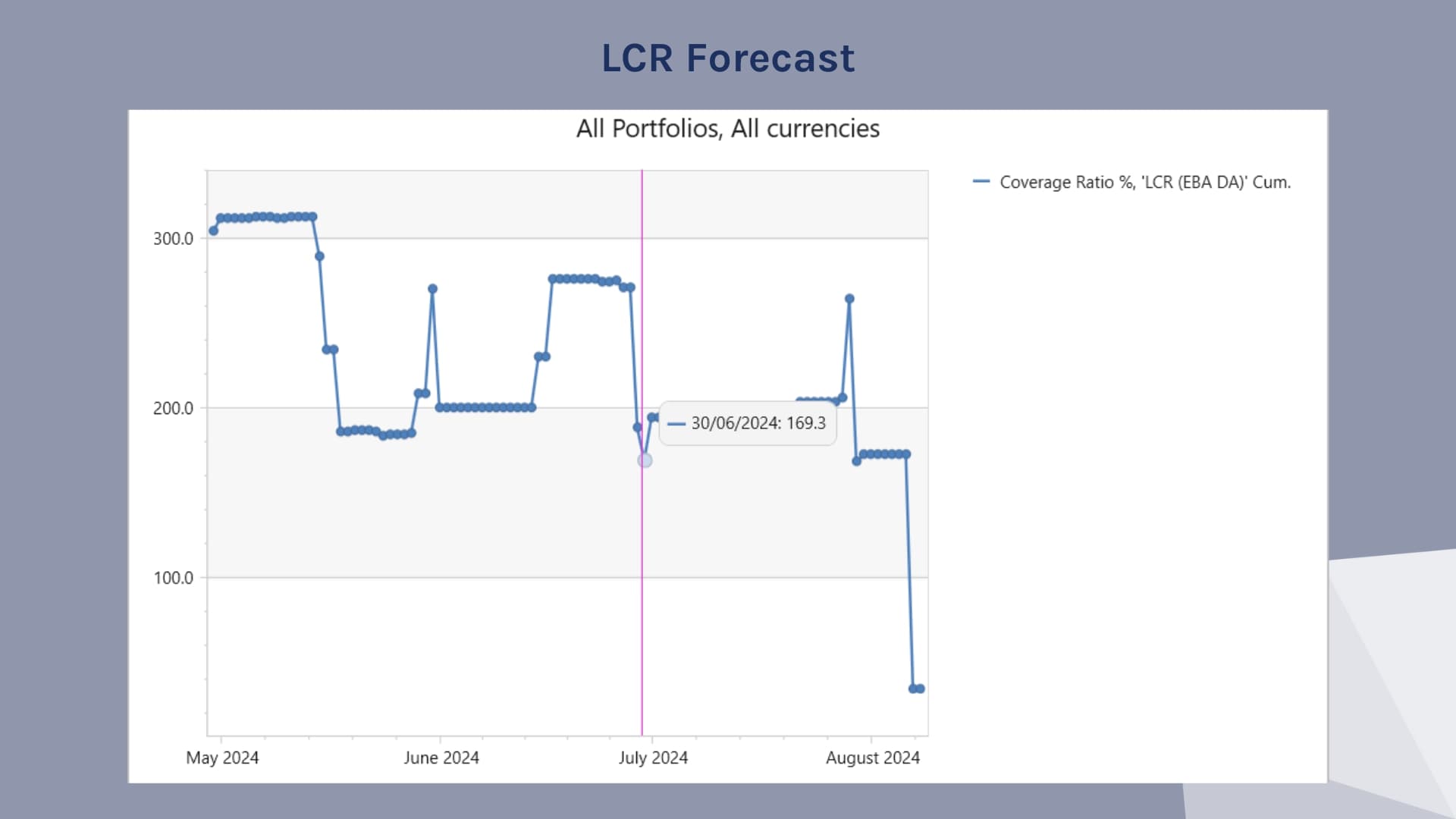
MORS helps banks monitor, forecast and manage liquidity risk across regulatory and internal management perspectives. Integrated forecasting, scenario analysis and reporting capabilities provide visibility into current and future liquidity positions, supporting both day-to-day liquidity management and long-term balance sheet planning.
Calculate, monitor and forecast key regulatory liquidity metrics, including the Liquidity Coverage Ratio (LCR) and Net Stable Funding Ratio (NSFR).
Support Additional Liquidity Monitoring Metrics (ALMM) reporting through detailed cash flow analysis and liquidity reporting capabilities.
Assess liquidity resilience under stressed conditions by modelling funding outflows, liquidity buffers and management actions.
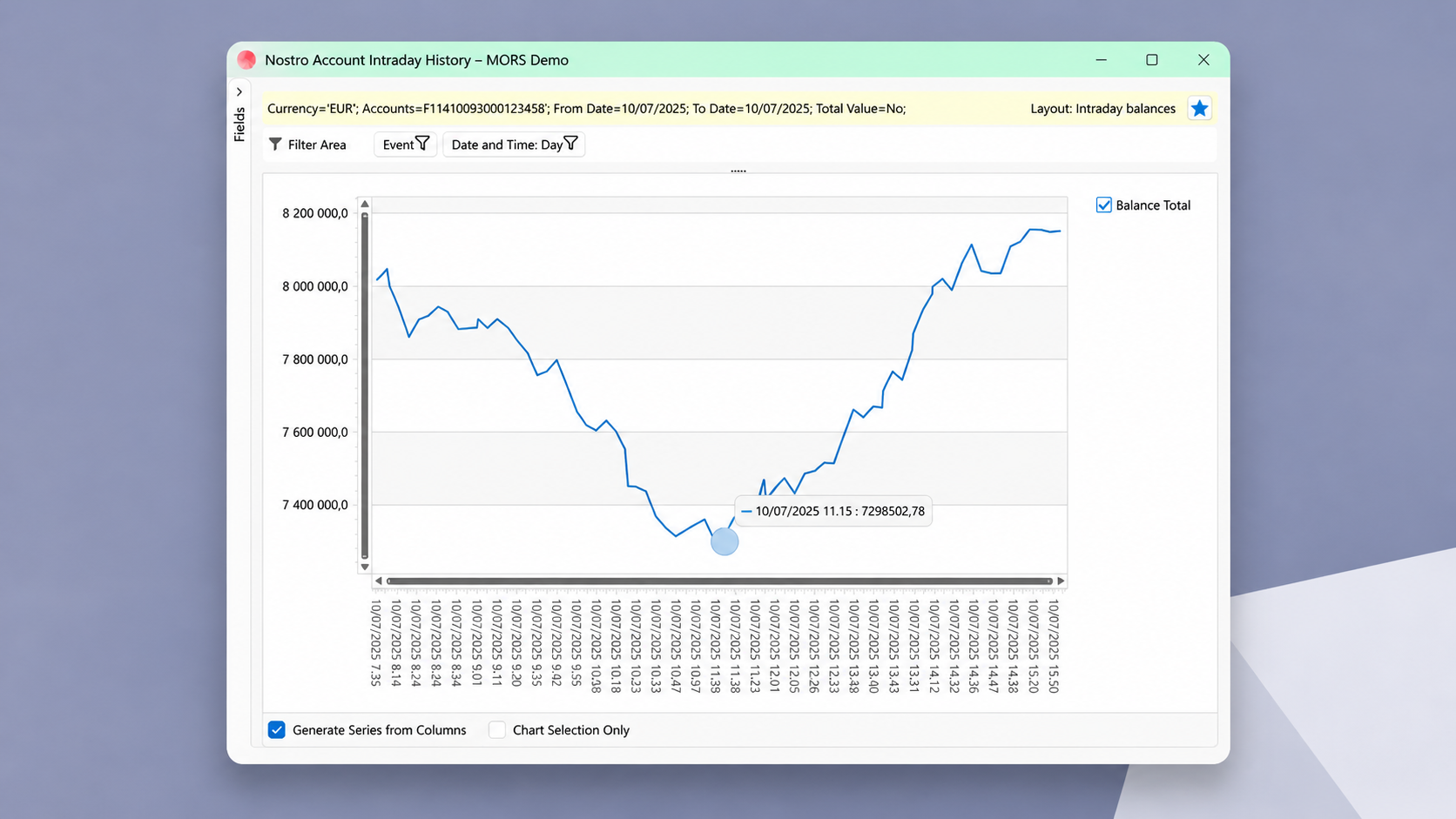
MORS supports operational and regulatory intraday liquidity management by providing visibility into account balances, payment activity and liquidity movements throughout the business day. Through integrated monitoring, analysis and reporting capabilities, banks can strengthen liquidity oversight and improve intraday decision-making.
Monitor nostro account balances across currencies and banking relationships to maintain an up-to-date view of available liquidity throughout the day.
Analyse payment flows, liquidity movements and account activity to understand liquidity consumption patterns and identify potential risks or bottlenecks.
Access comprehensive reporting for intraday liquidity management, supporting operational monitoring, management oversight and regulatory requirements.
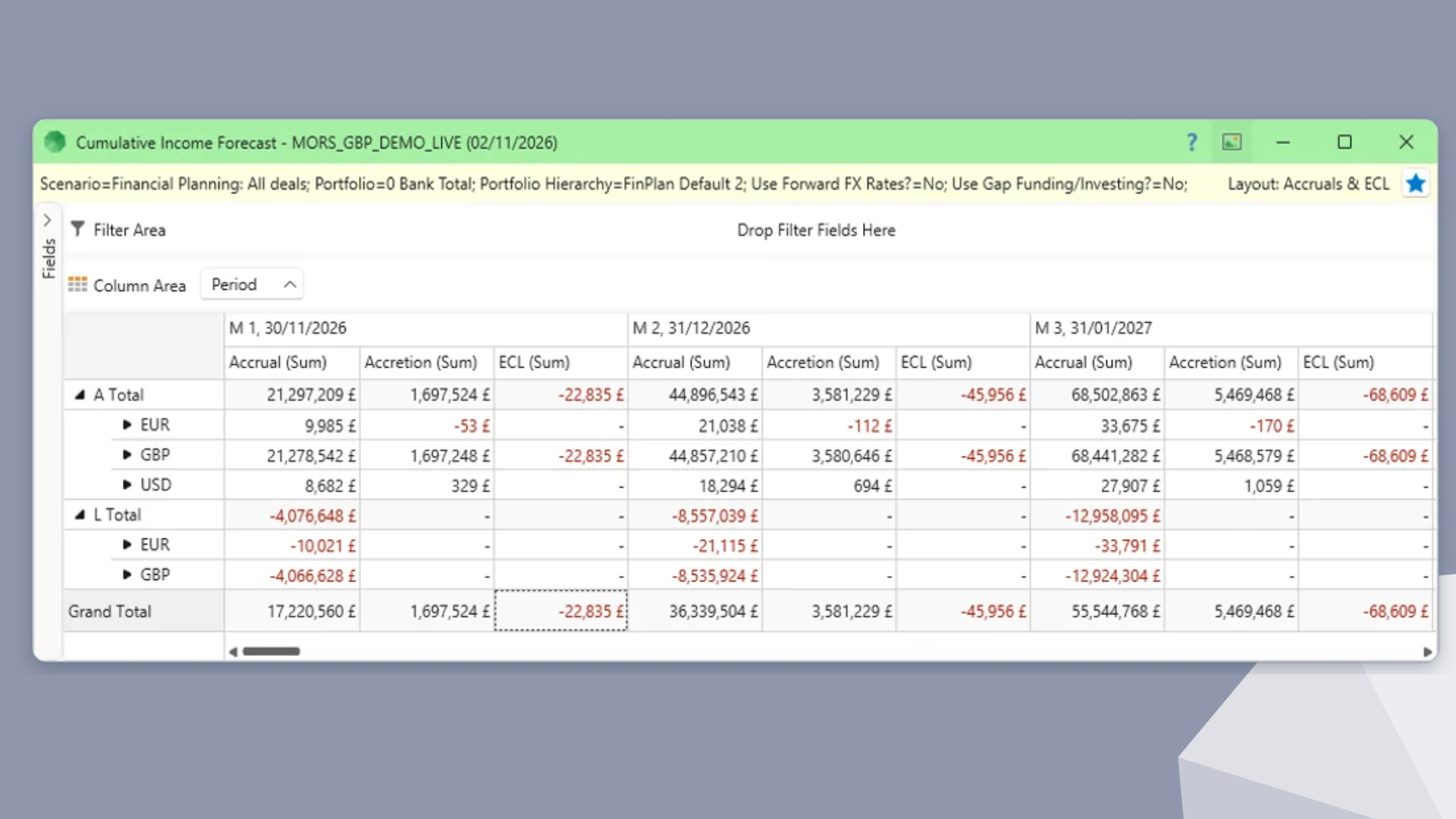
MORS supports selected credit risk management and forecasting activities as part of an integrated balance sheet management framework. By incorporating credit risk assumptions into planning and scenario analysis, banks can better understand the impact of credit quality and expected losses on future earnings and balance sheet performance.
Assess the impact of credit spread movements on economic value, earnings and balance sheet performance through integrated scenario analysis and risk measurement.
Analyse the potential impact of credit spread movements on portfolio values and financial performance under different market scenarios.
Incorporate expected credit loss assumptions into forecasting and planning processes through flexible scenario modelling and stress testing capabilities.
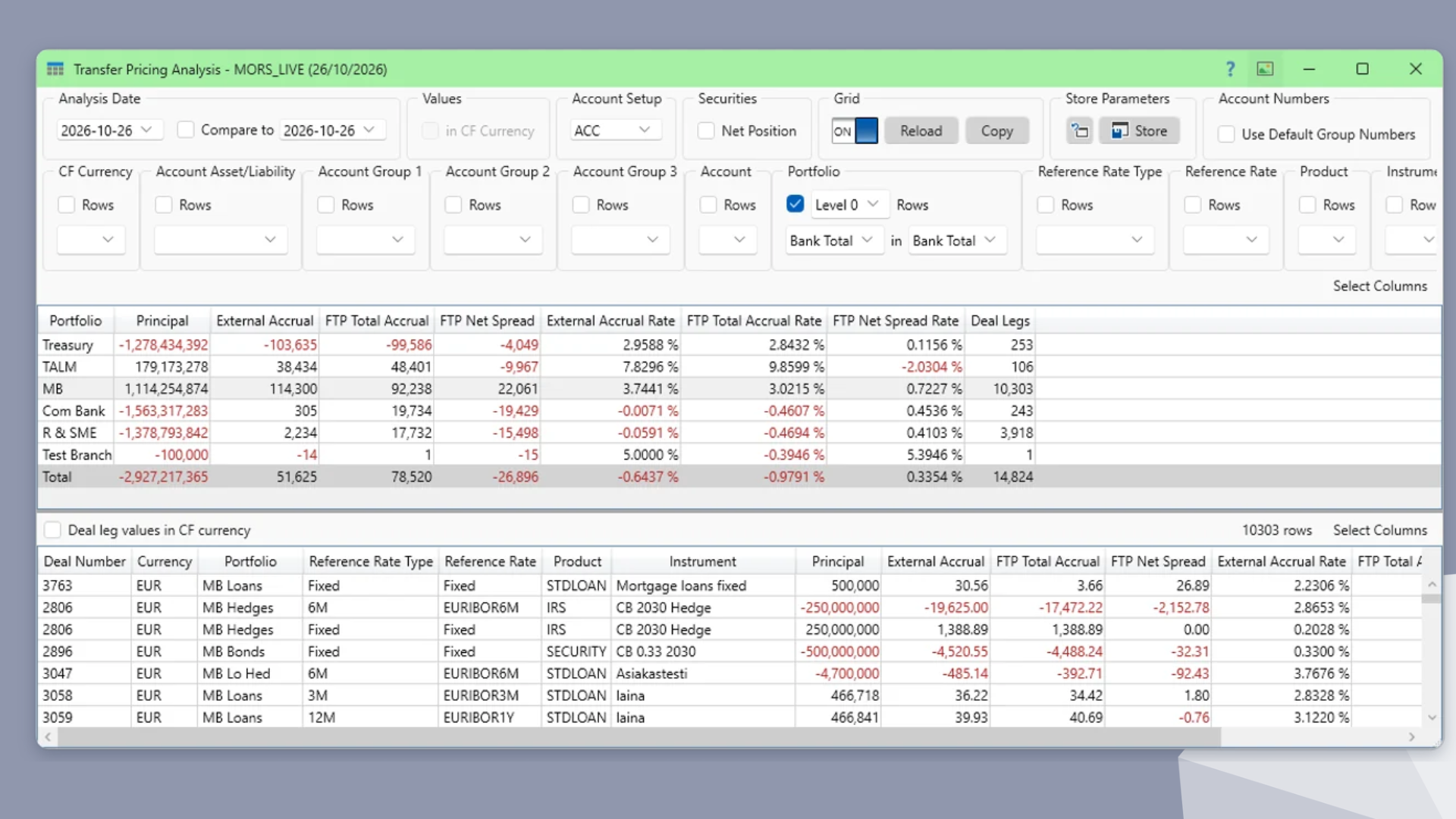
MORS provides Funds Transfer Pricing (FTP) capabilities to support balance sheet management, profitability analysis and performance measurement. By applying consistent transfer pricing methodologies across assets, liabilities and business units, banks gain greater transparency into profitability drivers and decision-making.
Define and maintain transfer pricing curves that reflect funding costs, liquidity premiums and interest rate risk considerations.
Configure flexible pricing methodologies and allocation rules to support the bank’s internal transfer pricing framework.
Model replicating portfolios for non-maturity deposits and other behavioural products to improve pricing accuracy and balance sheet management.
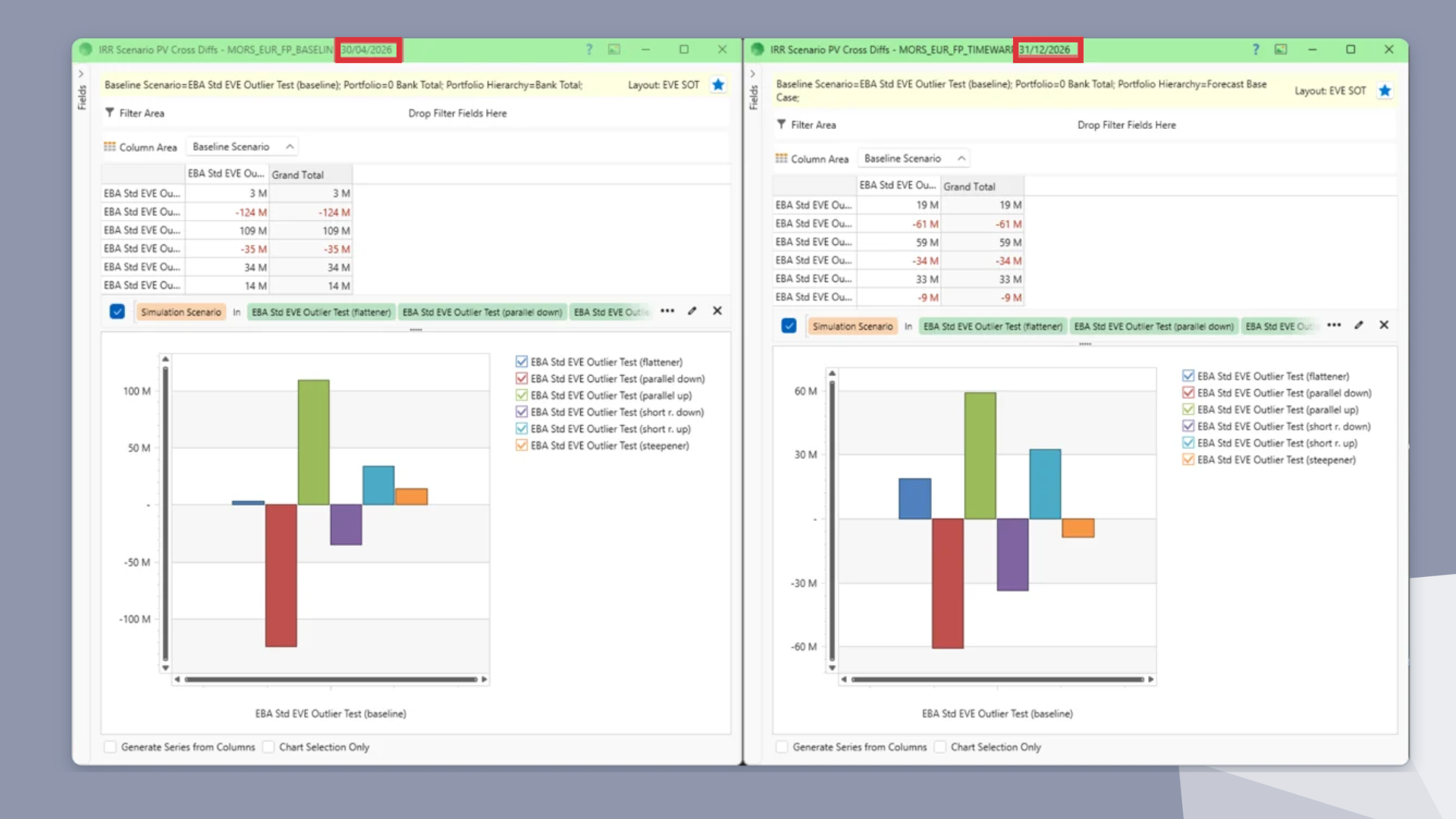
MORS enables banks to connect strategic planning with balance sheet management through integrated forecasting and scenario analysis. By combining growth assumptions, future balance sheet modelling and projected performance metrics within a single platform, banks can evaluate strategic alternatives and understand their impact on future financial performance.
Define growth expectations, product strategies and business assumptions to support forward-looking balance sheet and earnings forecasts.
Model future balance sheet development under different business, funding and market scenarios to support strategic planning and decision-making.
Forecast key financial and regulatory metrics, enabling management teams to assess future performance against strategic objectives and constraints.
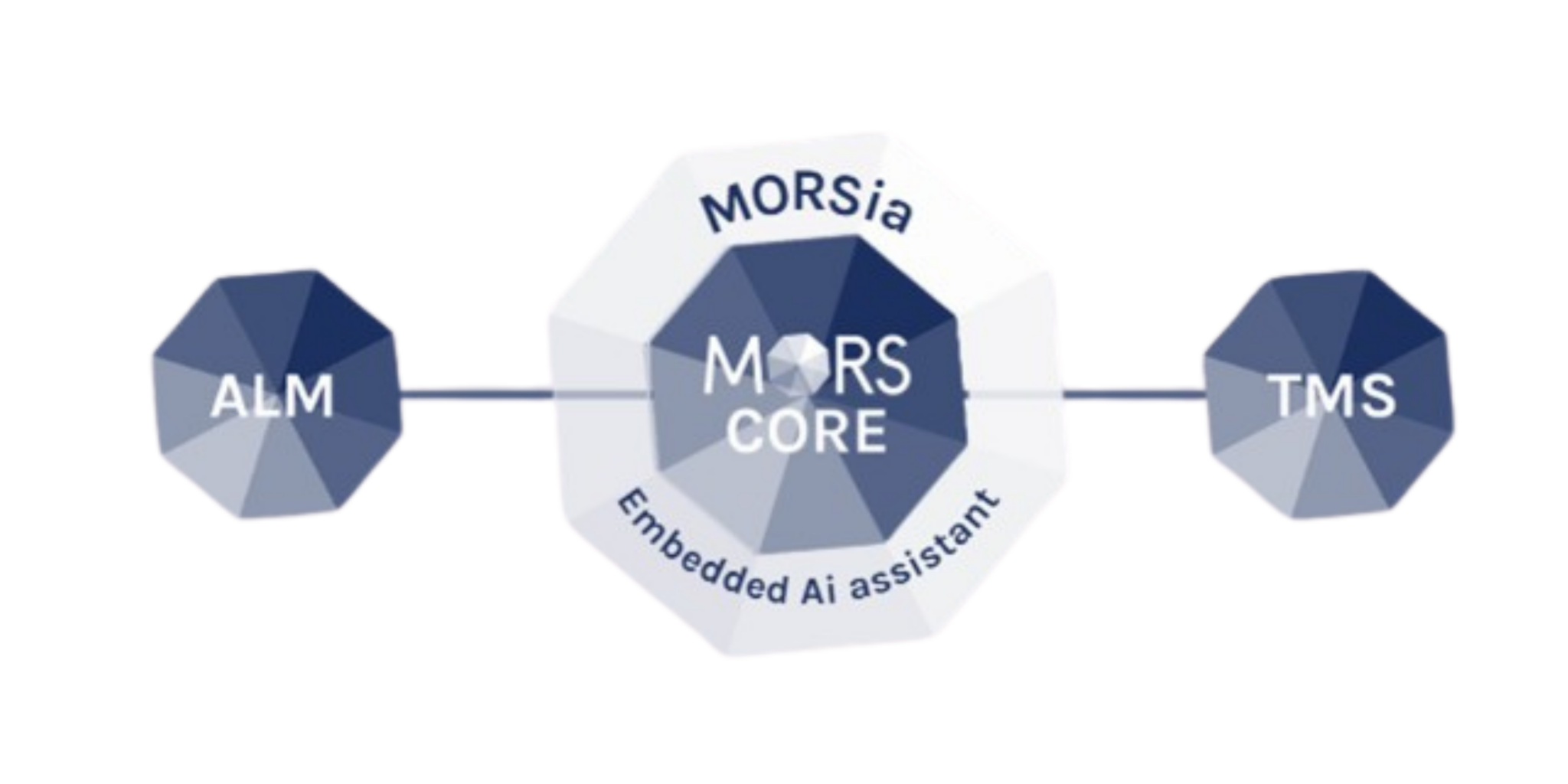
MORS offers a comprehensive Asset Liability Management (ALM) and Treasury Management System (TMS). Designed for banks, our platform is built on an atomic architecture with a unified core, ensuring that whether you opt for individual modules or the entire suite, you leverage a holistic and seamless experience.