AI is changing how we work, and at MORS, we are actively exploring what that means in practice. Over the past couple of years, we have introduced new AI tools into our everyday work and encouraged teams to explore where they can genuinely make a difference, whether that is supporting software development, analysing information, speeding up research, creating content or reducing repetitive work, while keeping information security in mind.
We have also been developing MORSia, our own AI Assistant for Treasury, ALM and Risk Management, bringing natural language interaction into the MORS platform to help users find information, access operational guidance and complete tasks more efficiently.
But becoming an AI-first company is not simply about introducing new tools or building AI-powered products.
It is also about creating the right culture.
People need the freedom to question existing ways of working, explore new ideas and test whether AI could help them do something differently or better. Importantly, not every experiment needs to lead to a successful outcome.
This is something that stood out in our latest Great Place to Work employee survey.
95% of MORS employees said they are encouraged to try new and better ways of working, regardless of the outcome.
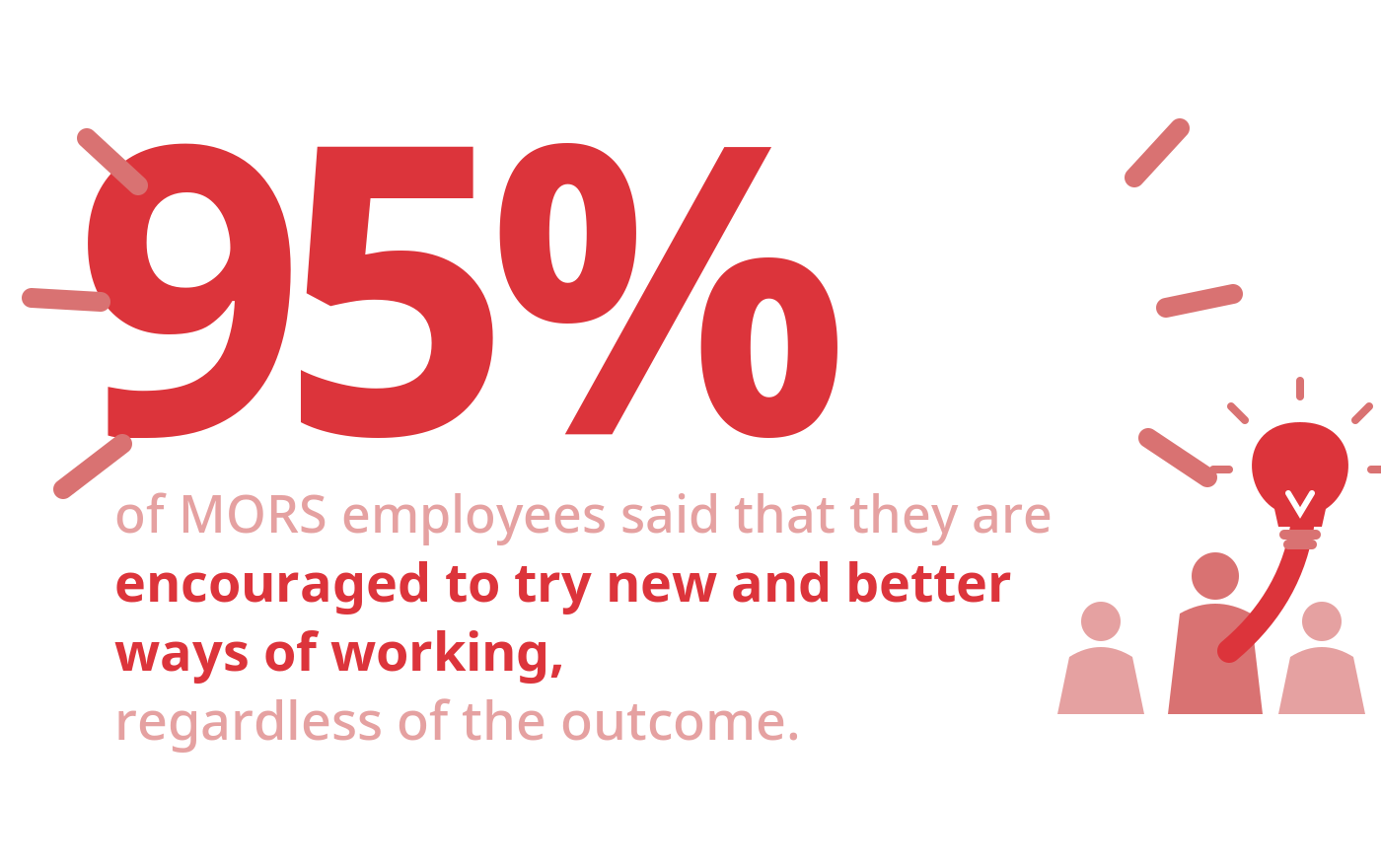
That result is particularly meaningful to us because it has increased from 79% in the previous survey to 95% today.
Creating room to try
Experimentation inevitably involves uncertainty. When trying a new technology or approach, you do not always know what the outcome will be before you start. This is especially true with AI. The technology and its possibilities are developing quickly, and there is no ready-made playbook that tells every company, team or individual exactly where AI will create the most value.
That means people need room to explore.
Sometimes an experiment leads to a better process, a new way of working or even a new product capability. Sometimes it reveals that AI is not the right solution. Both outcomes can be valuable if they help us understand what works, what does not and where we should focus next.
For us, this is an important part of what being AI-first means.
It does not mean using AI simply because we can. It means being willing to ask whether there is a better way to approach something, testing that idea and learning from the result.
Good ideas also need to be heard
Encouraging experimentation is only one part of the equation. People also need to know that their ideas are taken seriously.
Another result from our Great Place to Work survey was therefore equally encouraging:
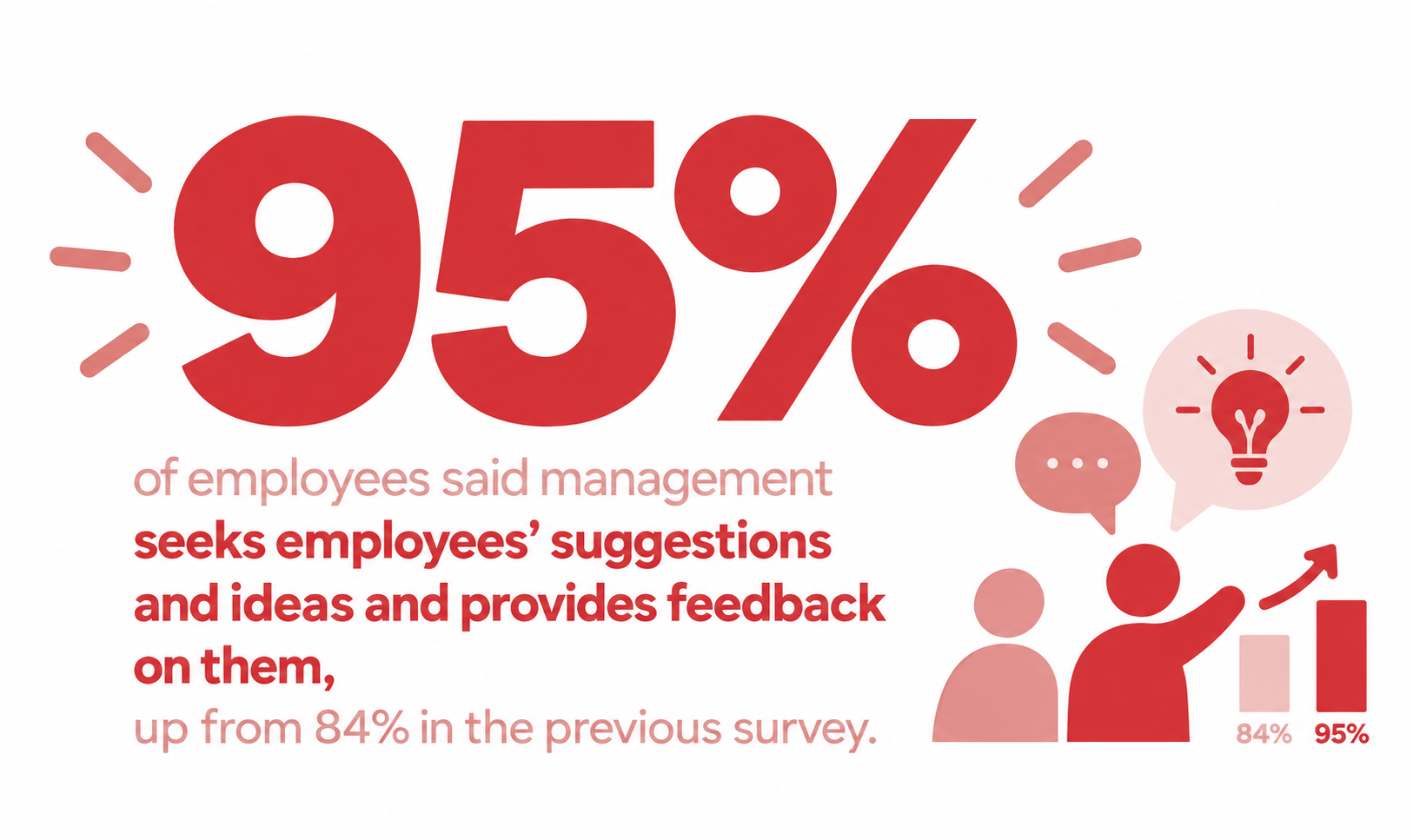
95% of employees said management seeks employees’ suggestions and ideas and provides feedback on them, up from 84% in the previous survey.
There is an important connection between the two results.
It is difficult to build a culture of experimentation if new ideas have nowhere to go. Giving people freedom to explore needs to be accompanied by a willingness to listen, discuss what has been learned and decide what is worth developing further.
The question does not always need to be “How can we use AI?”
Sometimes a better starting point is simply: “Could we do this differently or better?”
From experimentation to something real
One example of this culture in practice is MORSia. What is now becoming an AI-powered natural language interface for the MORS platform started with a customer request and a willingness within our development team to explore an idea beyond its original scope.
As Mikael Ekholm, Senior Software Engineer at MORS, explains, the team did not set out with a fully defined product in mind.
“MORSia actually started with a customer asking for our documentation so they could use ChatGPT to help train new employees. We thought, why not build something like that ourselves? Initially, it was about making our documentation easier to access through AI. But once we started experimenting, we realised there was an opportunity to go much further.
Instead of just answering questions about how to use MORS, what if AI could actually help users perform those tasks? That’s really how MORSia has evolved, from a documentation assistant into something much more ambitious.
We didn’t have that end goal in mind when we started, and I think that’s a great example of why having the freedom to experiment matters. Sometimes you discover opportunities you weren’t even looking for.”
What began as an idea to make documentation more accessible has since developed into MORSia, an AI Assistant designed specifically for Treasury, ALM and Risk Management. For us, this is a good example of what an AI-first culture can enable. An idea is given room to be explored, the first version is tested and challenged, and what we learn shapes what comes next.
AI-first does not mean AI everywhere
As the possibilities around AI continue to grow, it can be tempting to look for ways to apply it everywhere. That is not our goal. AI should solve a real problem, improve an existing way of working or create something genuinely useful. In some cases, experimentation will show that AI can make a significant difference. In others, the existing approach may still be the better one. At all times, AI will be used with due consideration for information security.
Being comfortable with both outcomes is part of experimentation. It also means that becoming AI-first is not something that can be driven by technology alone. People need the opportunity to explore, challenge assumptions and share what they learn.
Still experimenting
We do not have all the answers about how AI will change our products, our industry or the way we work. And that is precisely why the ability to experiment matters.
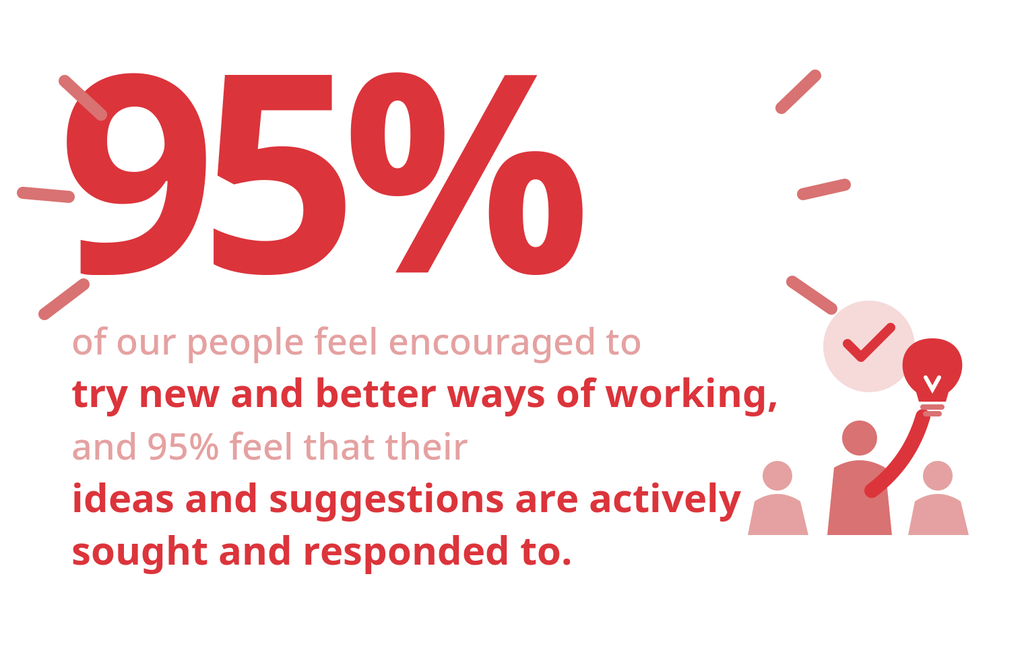
Our latest Great Place to Work results suggest that we are moving in the right direction. 95% of our people feel encouraged to try new and better ways of working, and 95% feel that their ideas and suggestions are actively sought and responded to.
As MORS continues to grow and develop our AI-first approach, maintaining that environment will be just as important as the technology itself.
For us, being AI-first is not about having all the answers. It is about creating an environment where people have the freedom to explore the questions worth asking.